ABOUT THE AUTHOR

Author, actor, producer, teacher and ne'er do well, Ms. McKenzie has taught over 100 courses in creative writing, technical writing, and essay writing. As a teacher, she focuses on helping each student to find their voice. As a writer, she focuses on keeping her own voice as authentic as possible. She has "traditionally" published one novel, two text books and one non-fiction book, and multiple essays, articles, and poetry. Recently, she has self-published three more novels and two more non-fiction books.

Thursday, March 4, 2021

Of Powerful Women and Gentle Men

         I built a fence two summers ago, and it still stands in my backyard, solid, clean and clear in the winter sun. I had never built one by myself before, though I had been a “crew member” helping others build them. But the old ragged, half-rotten fence that had stood in that section of back yard since I bought my house blew down in a Spring storm, and I had family (with DOGS!) coming to stay with me for the summer - a full fence was required. 
        So, I calculated, watched YouTube videos, and made a shopping list, then stood in my back yard looking at the task before me. First, was knocking down the old fence. I went about this with some joy - hammering off old boards, knocking out the rails, and pulling (with considerable effort) the rotted-out posts from the ground. Later, I would go through all that detritus and save usable sections of wood that would, in time, to go other projects, but, at the moment, my task was erecting the new fence as quickly as possible.              The first task was digging the post holes. The previous holes had, it seemed, been placed randomly, but I wanted my posts even widths apart - and also wanted to avoid digging out any concrete from the old posts - so I measured and marked the spots for new posts, picked up the brand-new post-hole digger I’d

purchased, and set to. My first unpleasant lesson was why those old post holes had been random - the ground here is littered with rock and very very very hard clay, with only a few soft spots, and none of the equally measured spots were in any way soft. The first post-hole took me days. I was saved when one afternoon my son-in-law and family were visiting and he helped me dig the rest of the holes. It was the only help I got in the construction of the fence, and was greatly appreciated. 
        Next, was setting in the posts. I had all the levels necessary to keep the posts both plum and straight, and the posts were set in a day with quick-drying cement. From there, I went about setting in the rails in each section, then began the process of putting up the pickets, keeping them aligned with the dips and hollows in the ground under the fence, so the fence line remained clean. Last, the entire fence was painted white to match the other fences in my yard. 
         All of that took much longer than I’d anticipated, but was still done by the time my family arrived, and kept three dogs neatly contained and happy running about during the summer they were here. 
         There were many glitches and problems along the way (as anyone who has ever built anything can well imagine). Each time, every single time that one of these things occurred, one of two things happened. When I faced a problem with skill, with equipment, with lack of resources to acquire better tools, I would stand back, consider my work so far, and have a memory of either my father or my late husband, both skilled woodworkers, that carried me on. I’ll never have the skill or natural talent they did, but I got something else.          When I was three, I wanted a horse for Christmas. Santa might as well not come if he did not bring me a horse, and I (apparently) made this quite clear to my parents. My family was in no shape to purchase or worse yet house and care for a horse, but my father was not daunted - he went down to his workshop, gathered up appropriate pieces of wood, and built me a rocking horse. He did not have much in the way of power tools (they were very expensive then) so much of the work he did was with hand tools, but on Christmas morning I found a beautiful black-and-white rocking horse under the tree. I named him Dobbin. Dobbin survived my youthful abuses and destructive tendencies, then was passed to my older sister for her children to use, then to my children when they were born and old enough to rock (so to speak), and now, still surviving, Dobbin is in the use of my grandchildren. Made by hand with no money and no professional tools, my father had crafted a lasting family treasure. 
         My husband was similar - as a young couple, we could no more afford expensive tools than my parents had been, but he built for me a lovely coffee table and desk, which I still have and which has turned a stunning golden over the years, and built bookshelves which our family continues to use to this day.
        Both of them, faced with lack of resources but with clear vision, found ways to use what was at hand to create something beautiful. I could do no less - when I looked at the next step in building a fence and

considered what I lacked, I could feel them there - my father’s clear blue eyes watching, my husband’s hand on my shoulder, in the way he always did when he wanted me to know he was at my back. 
         Other times, when it was my body that failed me, legs aching, arms so weary they felt like lead, I would find my grandmother and mother there. While my husband and father both died too young, with too much more to offer (My husband at 49, my father at 39), my mother and grandmother both lived far too long, into a time when their minds left them but their bodies had not yet given up. In spite of all that, what stays with me about both of them was their powerful unrelenting spirit. My grandmother had hip joints that were decaying and a back bent by years of hard work, but every time she needed something for her kitchen or her family, she went out her door and walked the entire distance across town to her favorite store, and walked back - she never stopped. 
         My mother, left with six children and a mountain of medical debt, did not give up even when the city threatened to take our home for back taxes. She found a family who needed a larger home, and traded homes with them for our house plus $8000, and paid the back taxes, and several years forward on the taxes for the new home. Both survived the loss of their husbands, the loss of children, the loss of everything they had, and kept going. In the backyard, tired and aching, looking at all the sections of fence still undone, I could do no less. 
         Not everyone has a family heritage like this of strength and gentleness, and I am more grateful than I can say for what it has given me. But we all do have someone who was an example for us of what we hoped to be. I told a couple of friends recently that I had reached an age where had become the woman I’d always hoped that I would be, and was so content with that. I used to believe that this woman - the one I’d hoped to be - was out of my reach, that I didn’t have it in me, but here I am, and I owe it to those powerful women, and those gentle men. 
         I’m not saying they were perfect - I could write an entire new essay about the failings of them all and how I’ve worked to overcome those things in myself (still working, actually), but that is not the point, here. The point is that to become what we want to be, it is helpful, possibly necessary, to honor the influences that can take us there. 
         The same thing applies to writing. I look to the powerful women and gentle men I’ve known in the arts as my inspiration, those who stayed true to the kind of writer or artist they hoped to be, no matter what the world (or other people) were telling them that they should be. Those women and men (mostly women!) are with me when I sit down to write, even though many of them are gone from this world, and the most influential I haven’t seen in years. They taught me, through their work, through teaching me, and through their very selves, that the important thing is not what the world around you thinks you should do with your writing (or your art), but is instead the particular unique fire that drives you to the page, and being sure, day after day, page after page, rejection after rejection (and acceptance after acceptance) that you never let anything or anyone put out that fire.

Saturday, February 13, 2021

On Ignoring Writing Advice

Writers get lots of advice. Go to workshops, read magazines and websites for writers, attend webinars, take a class….advice is the one thing you are sure to get plenty of - maybe more than you’d counted on. Since a recent experience, it struck me as ironic that one type of advice regularly given has to do with what is frequently called “the internal critic” and, for the most part, that advice consists in finding strategies to ignore it. Not entirely, of course - teachers, workshop leaders, etc are all careful to say you want to ignore that internal critic when it is preventing you from writing, but that there IS a time to invite that critic back - once you have a full draft and need to begin revision (and, sadly, many of us take the first part of that advice to heart and like to ignore the second part). Why is this advice now ironic to me? Because it asks you to ignore your own internal voice telling you that something is wrong and crush forward in spite of those warnings, while I believe that your internal voice can be your best friend in writing, certainly if your goal is to be a writer whose writing is real, authentic, and the kind of writing, the kind of words, that speak to a reader in a voice they can’t ignore. The notion that anyone involved in a creative process should ignore their internal voice is, to be, the absolute antithesis of good advice. Following such advice seems to me to be dangerously close to actually suppressing (perhaps totally destroying) personal creativity in order to move towards the type of creativity the community around the writer expects and approves. Let me be clear: there are some fine lines to be aware of here. If the internal messages are lack of confidence, self-criticism
of your own abilities, and messages that all your work sucks, then you do need a break from it - but simple doubt, simple uncertainty, a small voice telling you that something is wrong with the direction you’re taking could be trying to send you a very important message. It is easy, as a person in the world, to attribute more wisdom to your community than to yourself - and that could well be true. But, when it comes to what it is you need to create, how it should be, what form it should take, no voice is more important than your own. Recently, I took a break from writing, and, as it happens, from many other things. My reasons had nothing to do with pandemics
or politics-fatigue….or anything but a need for some time, some space. I’ve been writing daily for a very long time, but had been ending each writing session with a vague sense that something I was doing was not right. When I tried to narrow it down, I kept thinking of the days I spent with my graduate writing cohort, and how the frame of mind I was in after each of those produced some of the best writing I have ever done. I needed that frame of mind. Desperately. I spent years teaching writing, decades in writing groups, and have worked with teachers, other writers, editors, and students evaluating writing - all of that provided valuable tools for improving writing technicalls. I needed the frame of write that focused on what matters to learn to put all of that - every bit of it - aside, and welcome the frame of mind, the mental ability, to improving writing fundamentally - finding the spirit, the core, and light in my mind, that knows the important things that only I can say, and that will always, always move me there. For that, I needed space from the world. And thank God I listened to the voice urging me in that direction. To my voice. Listen to yours.

Sunday, January 3, 2021

A Wild Silky Thing - Mary Oliver on Writing Poetry

Some time back, (read; before the pandemic) I went to my writing group with a request. I had been (and still am) a member of this group for years, and I felt there was something we’d been neglecting. Can we, I suggested, perhaps spend less time on the craft of writing, and more on the art of writing? Members were unclear about what I meant by the difference. What followed was a result of my failure to communicate what I meant by it to them (which seemed obvious to me) - I became, as I tried to communicate it, more and more frustrated, eventually taking a year-long break from the group to process and re-set. I never was fully able to communicate what I meant about this difference to my group, but tonight, after working for a few hours - I frequently work in the late hours of the night, often into the wee hours of the morning - I picked up one of my books on poetry-writing, this time A Poetry Handbook by Mary Oliver, one of my favorite contemporary poets. I had read it before, but this time, as I began reading again, a particular section spoke directly to my heart, and answered the question I’d been unable to answer for my group: what is the difference between art and craft? Though Ms. Oliver was not specifically talking in those terms, she might as well have been. Speaking of what poets do as they approach learning to write poetry as well as they can, she says:
“....a kind of possible love affair between something like the heart (that courageous but also shy factory of emotion) and the learned skills of the conscious mind.” Oh, my - if only I’d had those words back then! Ms. Oliver had said earlier that this ‘affair’ - this ‘something like the heart’ cannot be learned - we are born with it or without it, she says, though of this I am not sure. It is the practice of combining the “possible love affair” with the ‘learned skills’ that creates art. Those “learned skills of the conscious mind” are, to my way of thinking, the craft - the part that is learned and practiced and polished. Leonardo da Vinci once said “...where the spirit does not work with the hand there is no art” - that “something like the heart” is the spirit that must be deep in a passionate affair with the learned skills for poetry to be written - for, in my opinion, any good writing to be written. We must, however, let it out, let it be in love with our skills to write poetry, to write (I believe) anything worthwhile. She says that this “spirit” da Vinci speaks of is “...that wild silky part of ourselves without which no poem can live…...it won’t involve itself with anything less than perfect seriousness….this is the first and most essential thing to understand. It comes before everything, even technique.” This is something I had experienced in graduate school studying creative writing - my advisor pushed everyone in our cohort to find that passion, find that fiery essential place within ourselves that had so many words, so much sound, and so much love to give to our writing that we could not acknowledge it or look at that part of ourselves without needing to bring it out in words. This work was the foundation of every critique she gave us, every student conference, every seminar discussion. Though we didn’t use Oliver’s words at the time, what we were all doing, day after day, was being lovers, engaging in a passionate affair between
something like our hearts - that wild silky part of ourselves - and our learned skills. We of course had classes and workshops on technique and form and reading lists to complete - but the real work, the essential work, was having, each of us, our own possible love affair.

Sunday, November 15, 2020

ON POETRY, INSPIRATION, and WHAT IS AND IS NOT IMPORTANT

I’ve been working on some of my poems this morning, and an overwhelming sense of gratitude keeps pulling my attention from the page, so it is time to express that gratitude. Until recently, I had never submitted my poems for publication. But I recently did begin to submit them, and I have had more success getting them published than I ever expected, and that is really due to my taking to heart the support of a very few people from my past.

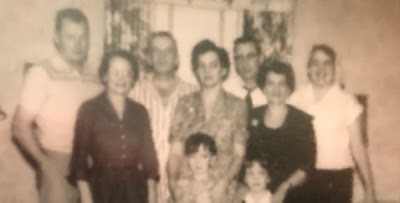
Sister Sal, upper right at the end
Sister Sal, upper right at the end (around the time we had the argument!)
(that's me, center in front of my mother)
First, my late sister Sally. With the very first poem I wrote (I was ten) she argued with me for quite a long time that I must have gotten it from some book - I couldn’t have written it. She was trying to give
me (rest her soul) a lesson against plagiarism, but instead gave me a different lesson - that there was
something
worthwhile about what I’d written. Love you, Sal.

That lesson was reinforced when I was in graduate school. My main Masters’ advisor - the wonderful amazing Nicola Morris - was constantly reaffirming the poetry I sent her. She could be brutal with her feedback, but always, always it was underscored with careful thoughtful advice that was infused with her deep desire to see you succeed in getting where you were trying to go. I loved her then, and always will. I would wait with no small anxiety for the package each week containing her critiques, and


they would always send me back to my keyboard with excitement and energy to GET THERE. And, when she liked a poem as I had submitted it, her comments could send my spirit flying for days. My favorite was a comment scrawled in an upper corner of one poem that simply read:  “Lovely, lovely, lovely.”

So why didn’t I send poems in for publication until all these years later?  That is due to another, considerably less appreciated, person from my past, my fourth grade teacher, Sister Something-Or-Other (I think I’ve forgotten her name out of revenge). She would take student writings from our English class and call us up to her desk in front of the rest of the class for her to comment on them. I will never forget the day I had turned in an essay about the men and women of the working-class neighborhood where I lived then, and she called me up.

She looked at me, down at my paper in front of her, and then stared out the window at the back of the classroom as she said:  “You are a very good writer - it’s just too bad you don’t write about anything important.”

That comment never left me. If there is anything a writer wants, it’s for those who read the words we've written to feel that they are in at least a small way, important. Her words did not stop me, over the years, from submitting stories, essays, and, finally, a novel even after I'd received buckets full of rejections. But never poetry. I’d had three poems published, but submitted by teachers of mine, not by me. Why could I submit all these other writings and not my poetry?

Because, what it took me years to realize is that poetry, at least for me, is the heart of everything. Damn near everything I’ve ever written began with an idea expressed in a poem, and sometimes some


language from a poem made it into essays or stories or novels. Once, in a review of my novel “Somewhere Never Traveled” the person reviewing wrote “J. McKenzie must be part poet….”  Few comments I’ve ever received made me smile so broadly. 

Someone once said that poetry is the art of levitation - meant to uplift the reader, to take us somewhere that feels above the normal world, so that we can see clearly. I think most fiction writers feel that any writing should fit that - that we always aim to touch the most basic essence of humanity in the reader, and make it stronger.  That, dear sister I-Don’t-Remember - is IMPORTANT. 


Thursday, October 29, 2020

Of Windows, Writing, and Eartha Kitt

Recently, I posted this on one of my social media accounts; 

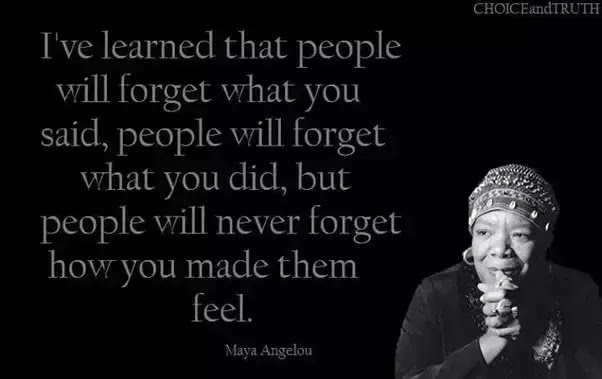
Some pieces are harder than others to write. Years ago, I went to a Women’s Studies conference where I was captivated by a talk (not her keynote speech) given by Maya Angelou. I don’t remember the exact words she used, I was very tired after three days of workshops/sessions and then having to bury myself in curriculum development (for the upcoming term) every night. I sat in the back of this informal break-out session and listened to her, and, as always, found her inspiring, articulate, stunning. I was feeling distanced from my fellow conference-goers, who were all (it seemed to me at the time), at the “angry stage” of feminist development, and days of exposure to that had wearied me. I sat and gratefully listened to Ms. Angelou, but not really listening, just sinking, at the back of the room, into the first safe space I’d felt in days. Then she said something - this many years later, I don’t remember exactly what - and my head came up. I grabbed a pad of paper from my big conference bag and started to scribble. That “scribbling” went on for years.


What had hit me then, somehow stirred by Ms. Angelou’s words about something entirely different, was that women needed to reclaim silence, which had been for some time equated in our minds with being silenced. I tried many times over the next few years, mostly in essays, to capture the heart and essence of what I wanted to say about that. Three of those essay attempts were *pretty* good - one actually exciting an editor friend of mine enough that she argued with me to let her publish it, but, to me, it was Not. Yet. Right. Finally, much later, in an afternoon after tea with a dear friend, just sitting by my window watching her walk home, I picked up pen and paper and created the first draft of a poem. That, also, went through several drafts until one day I looked at it and exhaled. YES. That poem, “Looking Out the Upstairs Window” will be coming out in the Willowdown Books (UK) anthology The Poetic Bond X on November 9th.

I'd thought of this talk when I received an email from the editor (with proofs) at the same time I was sitting at my desk, struggling with another piece.  I've been trying to write a piece about Eartha Kitt, wanting, in that piece, to highlight your courage in being outspoken, focusing (for those who don't know), on the incident


where she spoke out to both LBJ and Lady Bird Johnson during a luncheon at the White House. I wanted (want) it to highlight courage, speaking truth to power, and to celebrate her for that. Even though I'd only been trying for a few days, neither first draft essays nor poems were capturing the sense I wanted. (That I want).

    I've been writing (and publishing) for a long time. It's exhilarating when you sit down with a pen and an idea, the words flow on the paper, and it's perfect, it breathes on its own, it has the right words. I think anyone who's ever had that happen would agree, and would also agree how rare that is. I will also admit that sometimes, coming back to those instantly perfect pieces months, or even years, later, I am a bit stunned to find they need work. I also have to note that, as exhilarating as those these-are-perfect-words moments are, it is even more so to work for them over draft after draft, working and working to find that - thing, the thing that makes it not just the right words, but the right heart. 

    That means not just working word by word, line by line (though it does mean that), it also means stepping back from each finished draft, and listening to it - what does it say? How does it feel? If the whole of it - the


words, the flow, the sense, and the content, don't absolutely SHINE with the feeling that you were aiming for, I have only one thing to say - START AGAIN.

    I say this as I continue to struggle, continue to try to find the right form, continue to try to even identify that thing that I'm looking for, not only in the Eartha Kitt piece, but in others I've been working on. Some of those are finished, edited, polished -- but NOT YET RIGHT. There does exist a problem with taking this approach - there are writers, and I know a few, who will never send out anything as they work it and re-work it and re-work it. How do you know one problem from the other?  If you're thinking it needs more work because you're not sure where it might have a market, or that there are those who would be upset by the content, that's the latter problem. If first readers tell you it's ready, if it's been workshopped and everyone approves, if you've done multiple edits for words, line by line, flow, and form and feel those things are perfected, but it still doesn't feel right, START AGAIN. 

    How to do this - how to find the form, the words, the heart - that is something that changes and can be elusive, as I'm re-discovering (for about the zillionth time) with this current piece. There are things you can do to help bring it about, to push yourself in that direction, and I plan to explore those more, here, in my next post.


NOTE:  Just another note that, though I was absent from these pages for close to a year, it is not because I wasn't thinking of it - the full reasons I stayed off this page (though I was/am writing like a madwoman) will be the subject of another post.     


Tuesday, September 22, 2020

Imprints in the Sand

    Tonight, when I sat down at my writing desk (my schedule currently is a LOT of nocturnal writing) I thought it was time I got back to my writing blog, and posted something actually about writing. Lately, I’ve been focused on a great many pieces I’m either editing or drafting, and writing has been going extraordinarily well, for a very long time, which, for a blog like this, is not necessarily a good thing.  Without personal (recent) experience of the stumbling blocks, what could I possibly write about that other writers would relate to? 

For help, I started browsing through a file I keep of drafts that I have started, either for the blog or for articles or essays. In doing that, I ran across several draft blog posts from my previous blog “Judy in

A student gathering at Eluwa Special School

Namibia” - an online journal I kept while I taught at Eluwa Special School (a school for the deaf and blind) in Ongwadiva, Namibia.
  One particular draft stood out to me tonight; my little internal voice whispering that it was relevant, I should explore. I’d like to quote it in full here:


This morning, I walked down to my classroom to print out some student evaluation forms for tomorrow (yes, I know it’s Sunday).  Both as I was walking there and as I was walking back, I took detours around the school grounds. It is a “home weekend” and many of the children have been picked up to go spend the weekend with their parents on their homesteads or in nearby villages, but many have not. Regardless, the campus is quieter than usual on a weekend. I walk around the buildings and courtyards, and, looking down, I see my own footprints in the soft sand everywhere I go – my little sandal with the “Ecco” imprint in the middle – surrounded (everywhere I go) by the footprints of the children (often bare feet) and the prints of other teachers. I see my own prints headed this way and that all over the school.

Yesterday, as Digna and I headed out down the unfamiliar sand paths (Note: we had been invited to spend the weekend with another World Teach teacher at her school outside of a village a few hours away) back to the highway, I always knew we were on the right path by the sight of my own footprints coming in.  There has been no wind in several days, and the prints last.

I can’t help but wonder, today, how long after I leave those prints will be here.  Ashley had

A homestead in the desert we visited that weekend

been worried about us getting lost going back to the highway in the confusing array of sand paths through the brush, but I just followed my own prints.  I realize that, at home, on the concrete walkways of my school, I leave no imprint when I pass, and wonder if that contributes to the occasional sense of having lost my way on my own campus. 

Another teacher here texts me that he can’t really, at the moment, bear the thought of going home to “business as usual” at his school in California, and I understand.  I miss everyone at home so much, but I already know the many things I will miss here – the constant greetings from everyone, the sense of welcome in the cultural traditions, and the clear sense of having left an imprint, a mark, an impression.   


Here’s what struck me:  “I realize that, at home, on the concrete walkways of my school, I leave no imprint when I pass, and wonder if that contributes to the occasional sense of having lost my way on my own campus.”  


I think every person - and certainly every writer - wonders at some point about the imprint they’re leaving - what is memorable and what is like a conversation in the hallway at work or school - dealt with in the moment, and then forgotten? We wonder if we've lost our way, and no one has noticed we're missing.

Here’s the odd thing - I never got lost in Namibia - in the twisting narrow openings between huts and

Heading out from the highway into the brush (Digna 
on the left)

shacks, in the chaotically arranged streets of the larger cities, in the unmarked pathways in the desert, I headed out, time after time, and got where I was going, and felt, each moment along the way, that I was where I belonged for that journey.

I’m sure that confidence, that centeredness, came from the people there. Fresh from their revolution and separation from South Africa, fresh from a successful battle against apartheid, they owned where they were, every step of their daily lives, and owned it with pride. Few of them owned land or much in the way of possessions, but they owned their country, they owned their lives, and the sensation was contagious. It shone from them, infused the air around them. It’s an impossible sensation to fully communicate in words. 

For a writer, the road to owning where you stand, what you write, is a difficult one. No revolution will help you, it has to be a revolution of one. Don’t lay down concrete paths designed for the masses - kick

"my girls" from one of my classes at Eluwa - they
certainly left an imprint on my life, especially 
Selma, bottom row center. I hope I left a good
imprint on theirs. 

pathways in the soft sand, and beckon others to follow your footsteps, your imprint. Find a place in the world of writing that, when you speak with your own voice, it is the voice of the owner. 

Your goal should always be to leave an imprint - from writing to brighten a single life, or writing to shed light, or writing to set a fire - you’ll know the right path when you find it.  It will feel like home, like you can see the imprints of your own feet, hear the sound of your voice, know that you fully own where you stand. Leave an imprint.


Monday, September 7, 2020

Re-Surfacing Out of a Love for Words

I love words.  I love their simultaneous clarity and their inherent potential for confusion (especially in English). There is, at one and the same time, a beauty to a word's simple, direct meaning, and a potential for darkness in their possible connotations.  Nothing gives me so much joy as to see words that bring understanding, that sweep away confusion, and that brush away the fog.  And nothing - not a damn thing - makes me as mad as words intentionally used to muddle meaning, to manipulate, and to mislead. Sometimes, similar muddled meaning and misdirection can be unintentional - unskilled speakers, or people who believe their profession requires more language rather than clearer language. I don't blame them.  I do find them frustrating, and I know many others do as well. 

So, for that reason, there's a new thing I want to start doing here with a series of posts I'm calling "The (Un)-Ravel." One skill I know for certain that I have is an ability to take complex or ambiguous (or intentionally disingenuous) words and make the meaning behind them understandable. What often happens in the process is that what I am making clear are errors (unintentional or intentional) in thinking. 

On social media, I've often posted such things - analysis of someone's communication or statements to try to suss out what is the message behind them, or the problems buried in them.  I posted an analysis of a decision written by Justice Alito, an analysis posted of an argument supporting gun rights posted by a family member, and several others - all received with enthusiasm by people who found them to be helpful in clarifying their own thinking about the issues. 

I love doing this - not to rile anyone up, not to take anyone down, but to try to make clarity and (please God, I'm begging for this) clear thinking more of a priority in the way we receive and process information. Note


that I did not say "critical thinking." I used the term "clear thinking" instead for two reasons.  A) the term 'critical thinking' is embroiled in and therefore has its meaning muddled by a great deal of dissension and debate about its validity in education, making the term so weighed down with connotations it loses its usefulness; and B) 'critical thinking' comes nowhere near being accurately descriptive of what those who use it mean by it.  "Clear thinking" is, to my mind, much more descriptive of my goal.

Note that the majority of posts I put here will still be about what they have always been - the various reflections, incidents, and skills a writer uses to find her way in her work. The "(Un)-Ravel" posts will always be titled with that identification, and will likely be much less frequent, as un-raveling what someone is saying and/or arguing takes quite a bit of time when their original language is unclear. 

For each (Un)-Ravel, I will take some public writing or speech or article, and give it that kind of shake-down, taking out and disposing of the dirt and mud that only obscures meaning to see what we have left. First up will be (coming SOON) an un-raveling of the words of US Attorney General William Barr in two


places - his written opening statement for the US House of Representatives Committee on the Judiciary, and an interview he did with NPR, in both settings where he appears to deny the existence of systemic racism, and makes broad statements about the causes of crime, the causes of police brutality, and the appropriate role of law enforcement. That un-raveling is currently in progress and should be coming soon.